
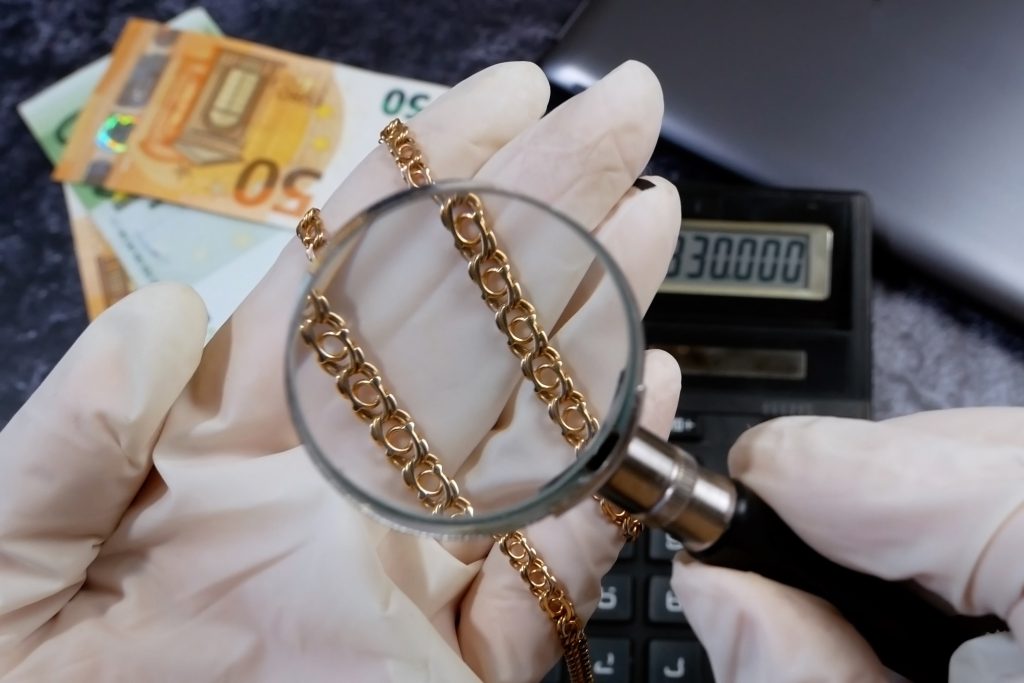
It is very common to be concerned about whether your gold is real or fake. It might be the case that you have purchased jewellery from a private seller or inherited a piece that, naturally, would make you question its authenticity.
As gold is such a valuable asset and has significantly increased in value in recent years, it means that fake items do exist. Knowing how to tell if gold is real before you sell it will save you from potential disappointment and ensure you get the best price possible for your gold. This guide will tell you everything you need to know when it comes to testing gold at home.
How Can You Tell if Your Gold is Real or Fake?
One of the difficulties when it comes to telling if your gold is real or fake is how similar they can look.
Real gold is a rare and precious metal that has been a sign of wealth for many years, so it’s no surprise that fake items exist.
Fake gold is typically made from a cheaper metal base, such as copper or brass, that’s then coated in a very thin layer of gold, which will wear off over time.
On the other hand, real gold has some consistent properties that are harder to replicate, such as weight and density, hallmarks, colouring and no reaction to chemicals. It has become harder to differentiate fake vs real gold, especially with new, advanced technologies.
Fake items can be designed to pass one specific test, but carrying out multiple checks or using a professional gold testing service will give you complete confidence in the authenticity of your items.
What Are Signs of Fake Gold?
Fake gold is commonly gold-plated cheaper metals, like copper or brass. This gives it the appearance of real gold, but over time, that thin layer will wear away, revealing the item’s true base. Knowing how to spot fake gold is important when it comes to buying and selling. Here are some common signs of fake gold:
Tarnishing or discolouration – Real gold will not rust or tarnish. If your item fades in colour or black marks start to appear, it’s likely gold-plated and fake gold.
Magnetic – Real gold is not magnetic. If your item sticks to a magnet, it’s likely fake.
No Hallmark or Unclear Stamp – Authentic gold will have a clear stamp like 9k/ 14k/ 18k. Some warning signs to look out for are GF (Gold Filled), GP (Gold Plated) and RGP (Rolled Gold Plated).
Skin Reactions – If you wear the item and it leaves green marks or irritates the skin, it’s a sign of fake gold and will probably be copper or brass.
How to Test Real Gold at Home?
There are a few safe and simple checks you can do at home to get an initial idea if your gold is real or fake. If you are wondering how to test gold at home, a good starting point would be a basic water test. Real gold is very dense and should sink instantly when dropped in water. Another quick and easy way to test gold at home is with a magnet. Real gold is not magnetic; if your item sticks, it’s probably not pure gold.
It’s important to note that these are basic tests and not definitive. Even if you’re exploring how to test gold at home, some fake items can still pass these tests, with some specifically designed to pass at least one basic check. A common culprit in fake gold is tungsten, as its density is almost identical to gold’s, and it’s also not magnetic. This is why it’s always best to have your gold professionally tested for a more accurate and reliable result.
At Cash4Gold Direct we can verify the authenticity and value of your item without the risk of damage.
What is a Gold Hallmark and What Does it Mean?
In simple terms, a Hallmark is like a stamp of quality. It will be a small mark on the piece of gold that usually shows the item’s purity fineness stamp, the maker’s mark and the assay office stamp.
In the UK, genuine gold items will have a full hallmark which includes all 3 marks, typically found on the inside of rings or on clasps of necklaces and bracelets.
Examples:
Purity Fineness Stamp –
375 = 9 carat
583 = 14 carat
750 = 18 carat
916 = 22 carat
999 = 24 carat
Maker’s Mark – The initials of the manufacturer or brand, for example AB
Assay Office Stamp – 4 authorised locations in the UK carry out hallmarking, each with its own symbol.
Birmingham – Anchor Sheffield – Rose London – Leopard’s Head Edinburgh – Castle
Should You Use a Professional Gold Testing Service?
If you have high-value items, sentimental pieces or uncertainties after home testing, or you’re unsure how to tell if gold is real, it’s best to use a professional gold testing service.
Professional gold testers use advanced technologies to provide accurate and reliable results. Professional testing will also be non-destructive, modern techniques won’t scratch or cut items preserving the aesthetic and market value.
At Cash4Gold Direct we provide accurate, professional valuations using advanced testing methods such as XRF technology. This is a non-destructive method that allows gold to be analysed quickly and precisely, identifying its exact composition without causing damage. We ensure transparent, trustworthy valuations and prices, giving customers complete peace of mind with their valuable items.
What to Do Once You Know Your Gold is Real
Once you have confirmation that your gold is real, the next step is to understand the potential value. The value of gold can depend on purity, weight and current market value, so it’s worth keeping an eye on live gold rates! Whenever you’re ready to sell, choosing the right buyer is key.
At Cash4Gold Direct, we offer secure, professional valuations to ensure you get the best price possible.
To get started, you can request a free postage pack, making it easy to send your items safely and receive a no-obligation valuation.